
From £25,000 claim to £7,000 settlement: a practical resolution to a lime render dispute
M.A Humm Ltd helped a building contractor resolve a lime render dispute for £7,000 against an original claim of approximately £25,000, while avoiding the further legal costs of continuing to fight the claim.
When external render deteriorates, the visible damage is only part of the story. Establishing why it failed, who carried responsibility and what remedial work is justified can be considerably more complicated.
In this case, M.A Humm Ltd supported a contractor facing allegations of defective lime rendering. The dispute involved competing arguments about workmanship, specification, exposure and the extent of the remedial costs claimed.
The property owners’ position
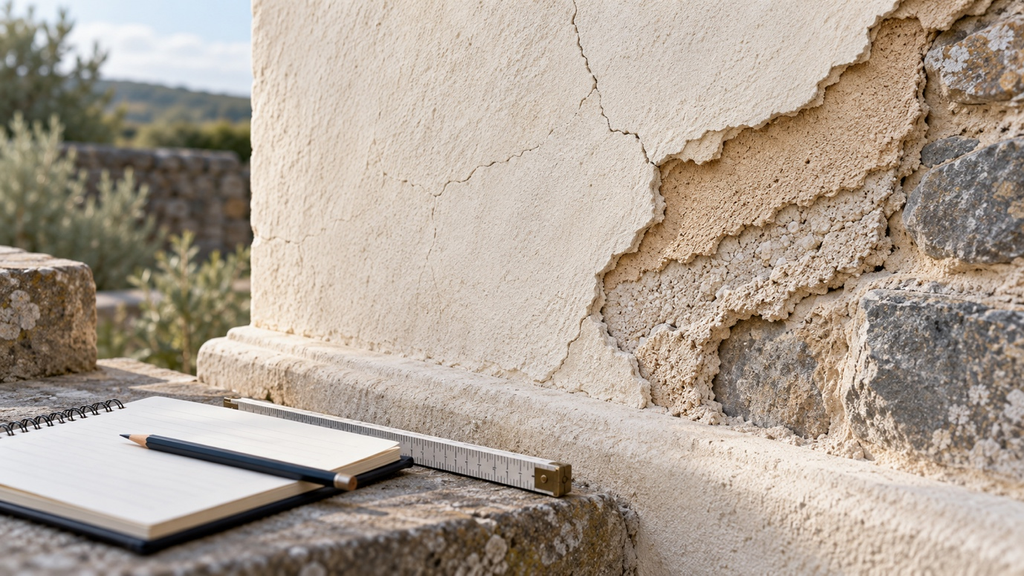
The owners reported cracking and deterioration of the lime render within a relatively short period after completion. They argued that the work had not achieved the quality and durability reasonably expected.
Their concerns included the render’s thickness, its mix proportions and the apparent absence of reinforcing fibres. A laboratory report described the submitted sample as porous and friable and recorded no fibres, supporting their concerns about the material.
The owners sought the cost of remedial work to two elevations, together with associated limewashing. Their quantified claim totalled approximately £25,000.
From their perspective, they faced deteriorating external finishes and substantial replacement costs, which they believed should be met by the contractor.
The contractor’s response
The contractor disputed that the deterioration established defective workmanship or justified the full amount claimed.
A central issue was the distinction between responsibility for the design and specification and responsibility for carrying out the work. The contractor maintained that it had followed an architect’s specification and questioned whether the specified render system was suitable for the building’s exposure.
The contractor also raised wind-driven rain, salts and weathering as possible contributors to the deterioration. Its position was that the condition of the render could not fairly be assessed without considering these factors alongside the workmanship allegations.
The laboratory findings therefore formed part of a wider dispute. The parties disagreed about what those findings established concerning the cause of failure and responsibility for the proposed remedial works.
How M.A Humm Ltd helped
Mark Humm led the response on behalf of the contractor, supported behind the scenes by David Harper. Their combined input helped the contractor challenge the claim, assess the commercial risks and work towards a practical resolution.
M.A Humm Ltd reviewed the specification, laboratory findings, correspondence and claimed costs to help prepare a structured response.
The review focused on three practical questions:
- What had the contractor been instructed to provide?
- What did the available evidence establish about the alleged defects and their cause?
- Was the scope and cost of the proposed remedial work justified?
This helped distinguish the existence of deterioration from the separate question of whether the contractor was responsible for every item claimed.
A detailed response challenged both responsibility and the extent of the costs sought. As the dispute progressed, the claim relating to one elevation was dropped, substantially reducing the amount pursued.
Why a commercial settlement made sense
Challenging a claim and deciding how far to pursue a defence are separate commercial decisions.
Although the contractor continued to dispute liability, further argument would have brought additional legal costs. Those costs would accumulate as the dispute continued, reducing the financial benefit of fighting over the remaining amount.
The decision was therefore taken to settle at £7,000 to avoid the expense and uncertainty of continuing to contest the claim.
M.A Humm Ltd’s support helped the contractor weigh the disputed issues against the likely cost of pursuing them further and reach a proportionate commercial decision.
The outcome
The agreed £7,000 settlement brought the dispute to a close.
Compared with the original demand of approximately £25,000, this represented a reduction of around £18,000, or 72%, before allowing for the contractor’s own advisory costs. The contractor also avoided the additional legal expenditure that continuing the dispute would have involved.
The outcome was a negotiated commercial settlement, rather than a court ruling on the competing technical arguments. It provided certainty over the settlement amount and allowed the contractor to move forward.
The value of a measured response
Construction disputes rarely turn on a single photograph, quotation or test result. The specification, contractual responsibilities, evidence of causation and proposed remedial costs need to be considered together.
This case also demonstrates the importance of knowing when to settle. Protecting a contractor’s financial position involves both challenging unsupported or excessive demands and recognising when further expenditure would outweigh the potential benefit.
Through detailed review, clear responses and practical commercial support, M.A Humm Ltd helped the contractor reduce the amount claimed and bring a prolonged dispute to a proportionate conclusion.
M.A Humm Ltd provides quantity surveying and commercial support to help contractors assess disputed costs, prepare clear responses and make informed settlement decisions.
Image caption: Illustrative lime render inspection

Tel: 01206 645 082
Email: info@mahummltd.co.uk
Location: Stanway, Colchester, United Kingdom